Launch offer — valid today only

📄 Digital book in PDF · read it on your phone or print it

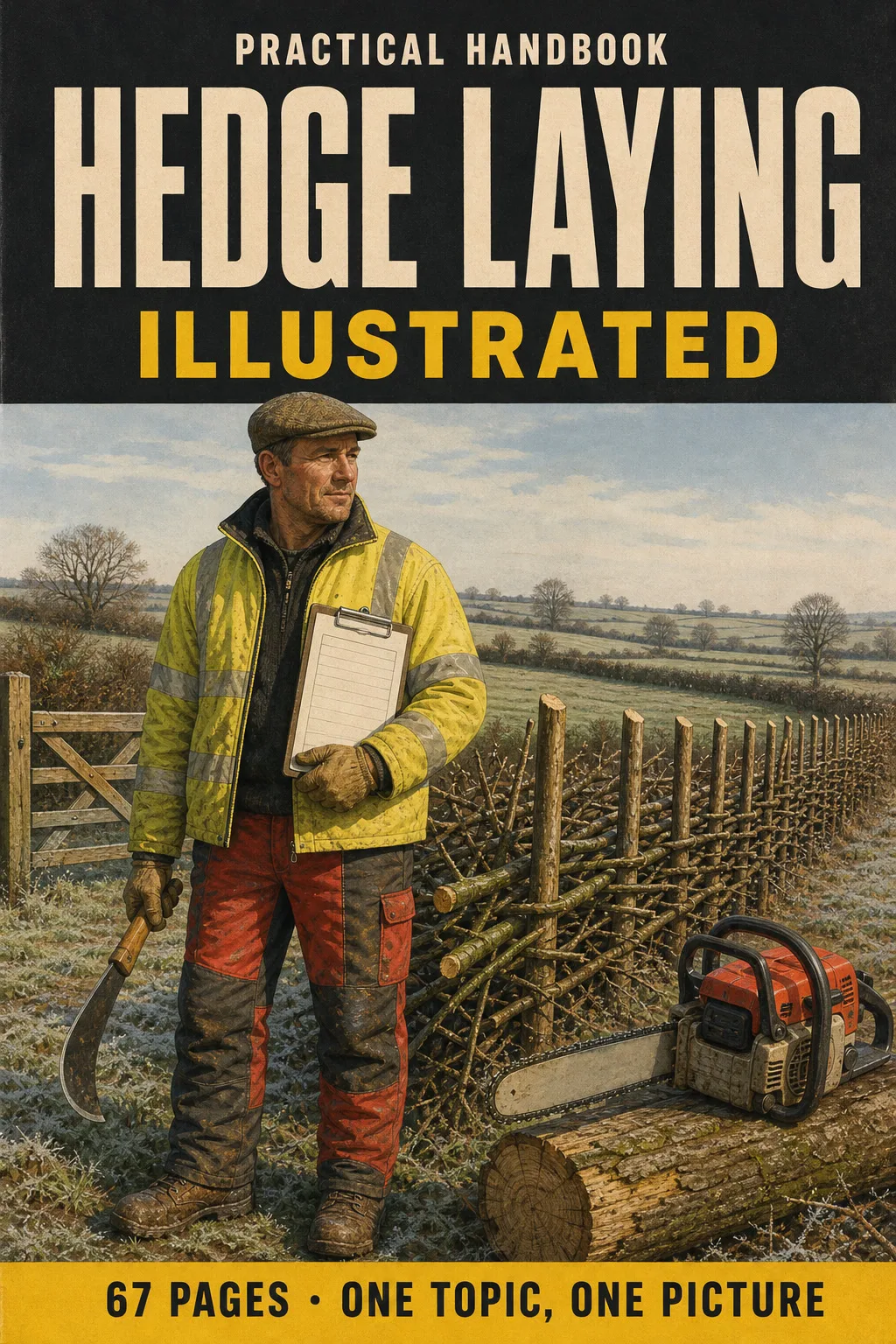
Hedge Laying in Drawings: Know Where Every Cut Stops From the First Cut to the Bound Top, in the Same Order

The pleacher cut, the hinge, the laying angle, stake spacing, binders, the four regional styles, nesting dates and aftercare. Every topic has its own page: the drawing first, then what you need to remember. 67 illustrated pages.

YES, I WANT TO SEE EVERY PAGE

🔒 Secure checkout · PDF by email · 30-day guarantee

Every topic, its own pageEvery cut, stake and binder drawn, with the explanation beside it
67 illustrated pages9 parts, from reading the hedge to the one-page review
Up-to-date sourcesHedgerows Regulations 1997, the 2024 England hedgerow rules and HSE chainsaw guidance
PDF by emailFormat

Look Inside the Book

Every page has one big drawing and a box with the angles, spacings and steps you need to know:

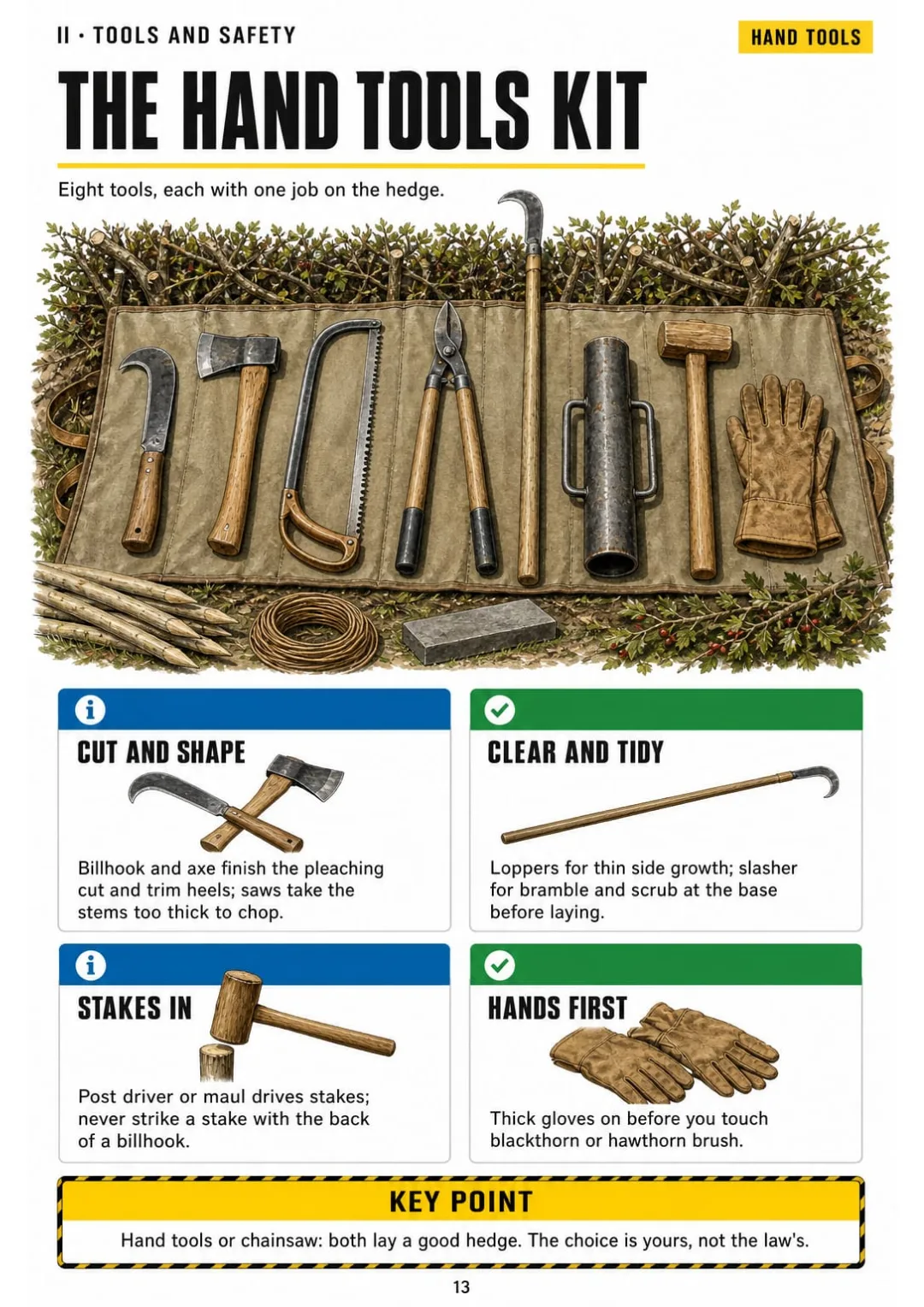
Eight hedge-laying tools, each drawn with its right job and its wrong one.
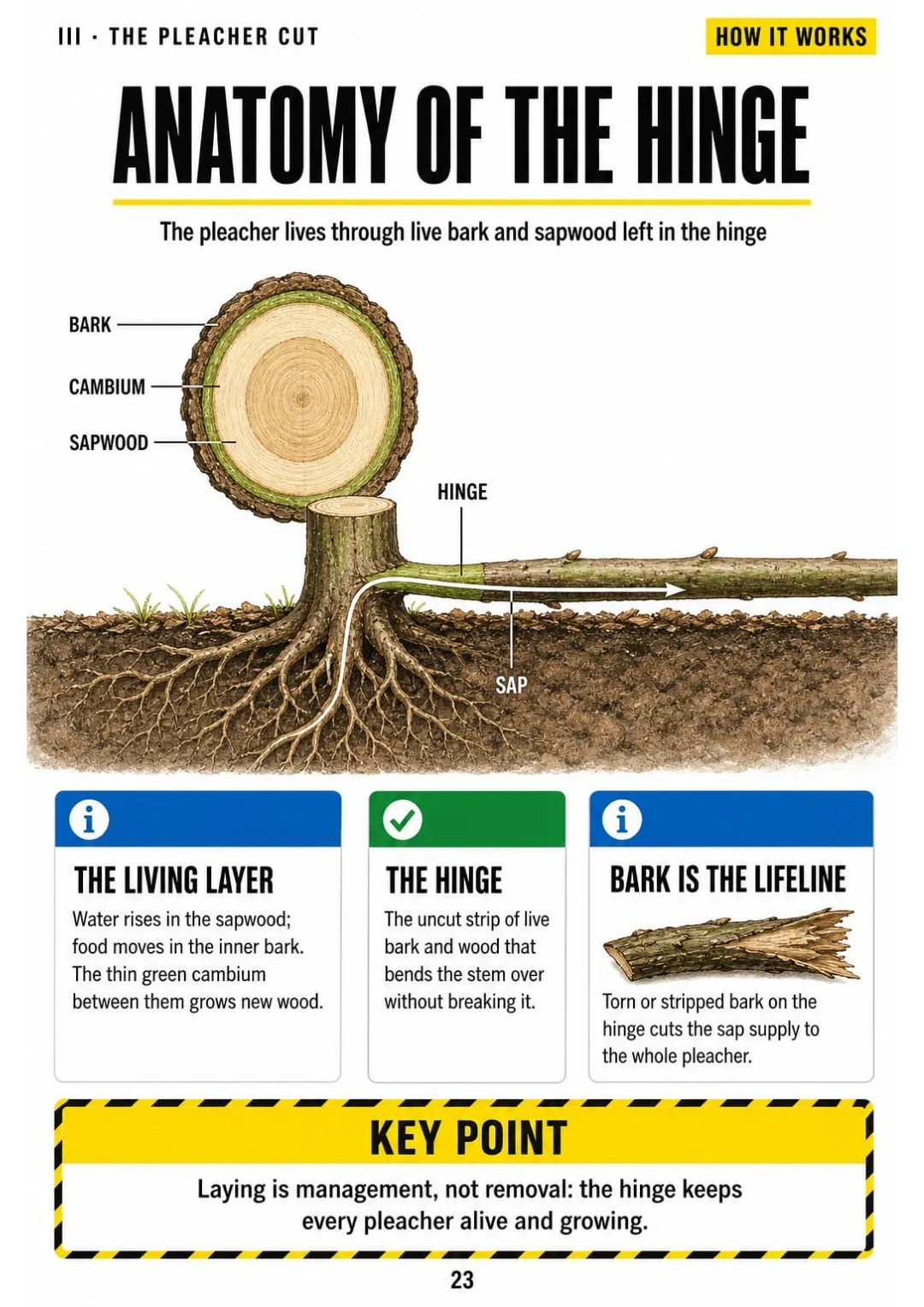
Bark, cambium, sapwood, heartwood: the hinge keeps live bark and sapwood joined to the roots.
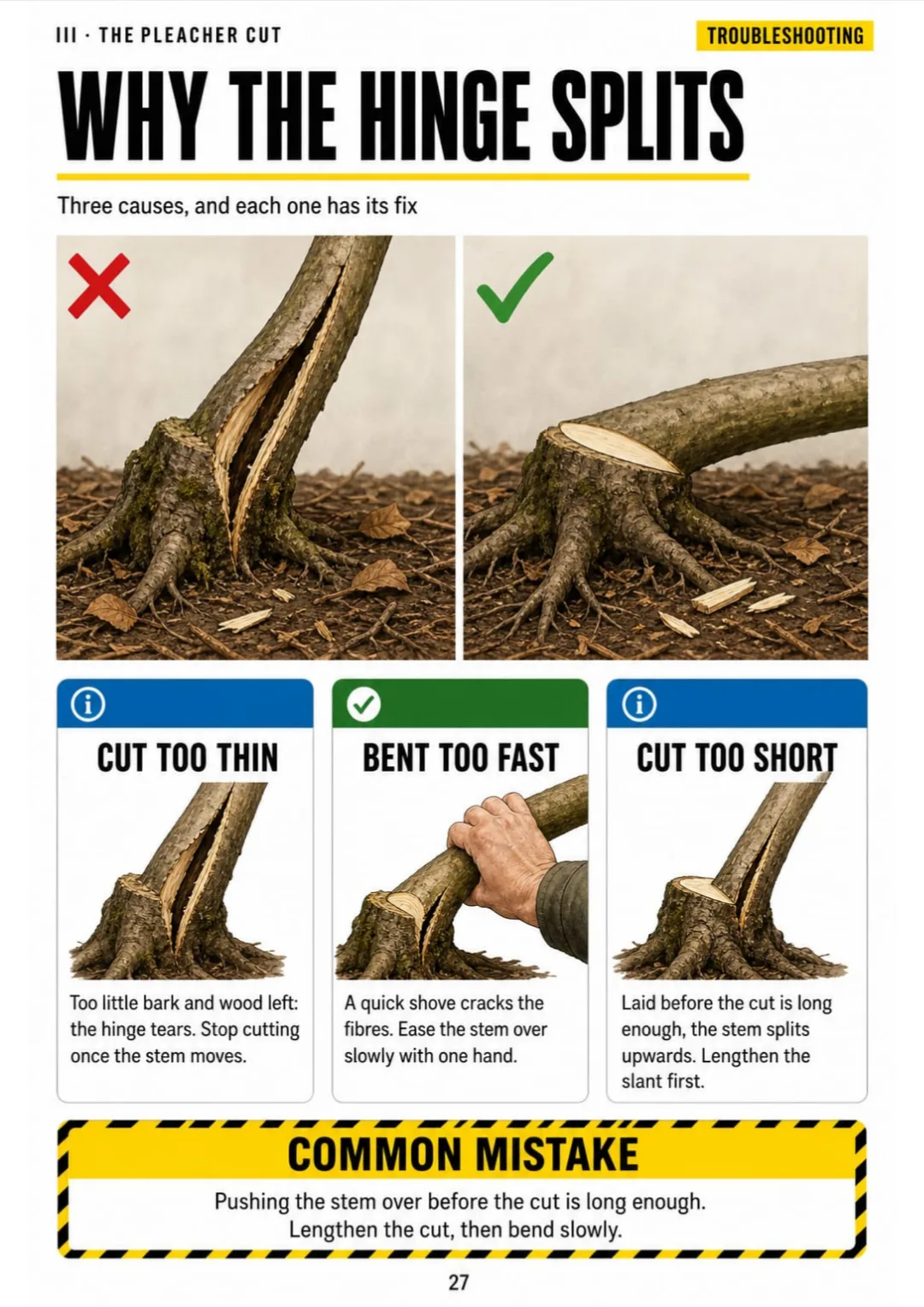
Split hinge: cut too thin, bent too fast or cut too short.
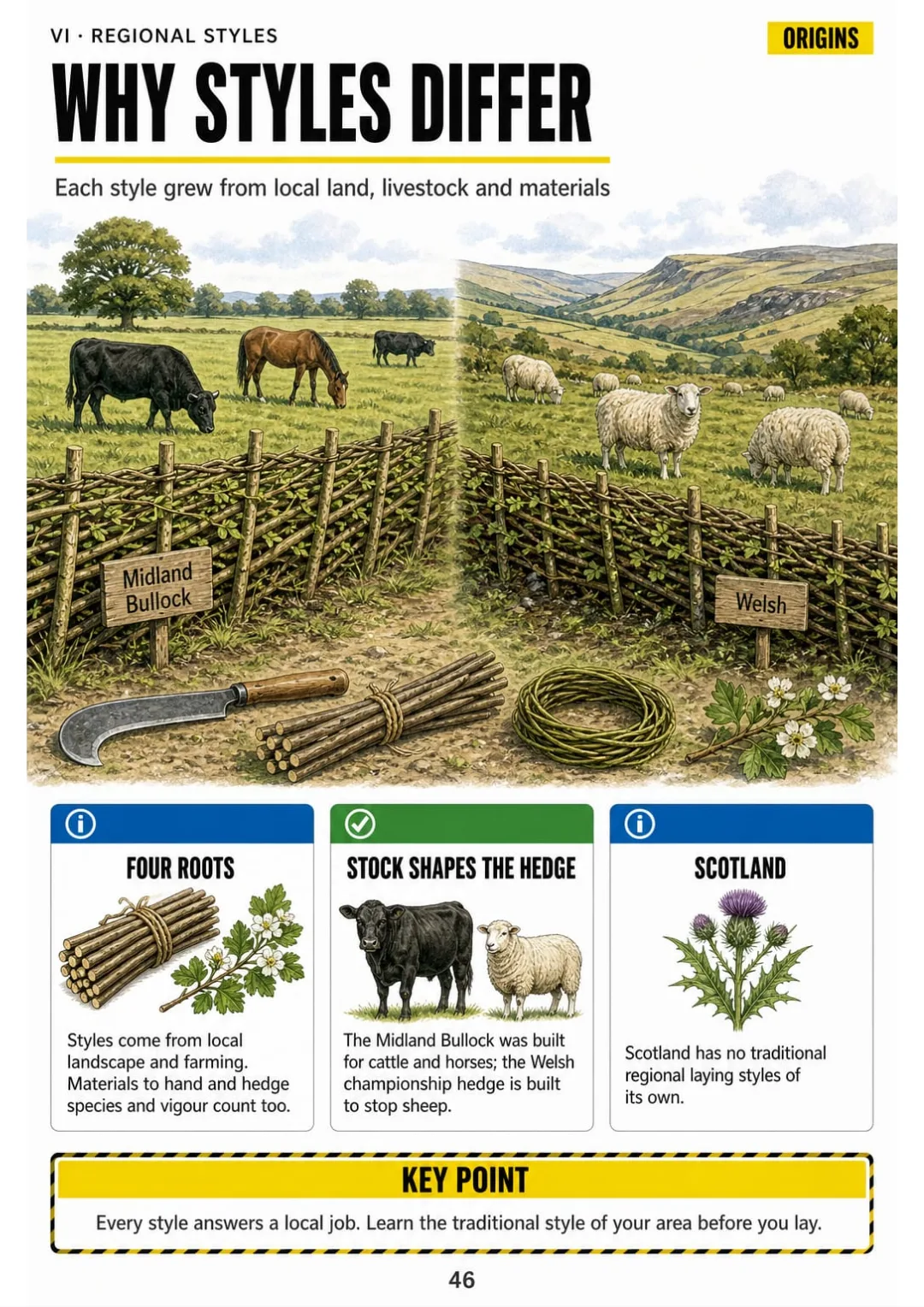
Landscape, farming, materials and hedge species: the four reasons regional styles exist.
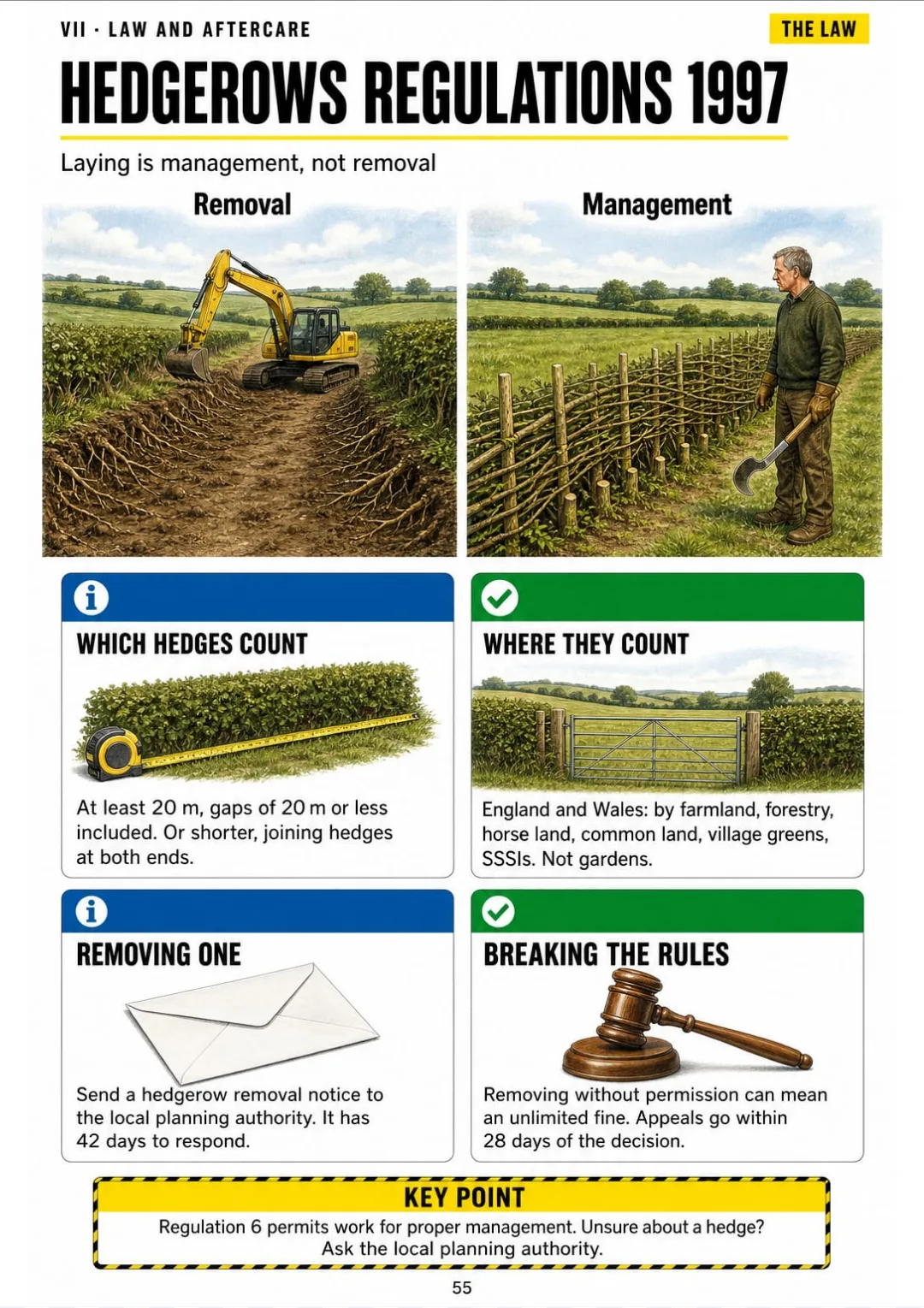
Protected hedgerow: over 20 m on farmland; removal needs a notice and 42 days.
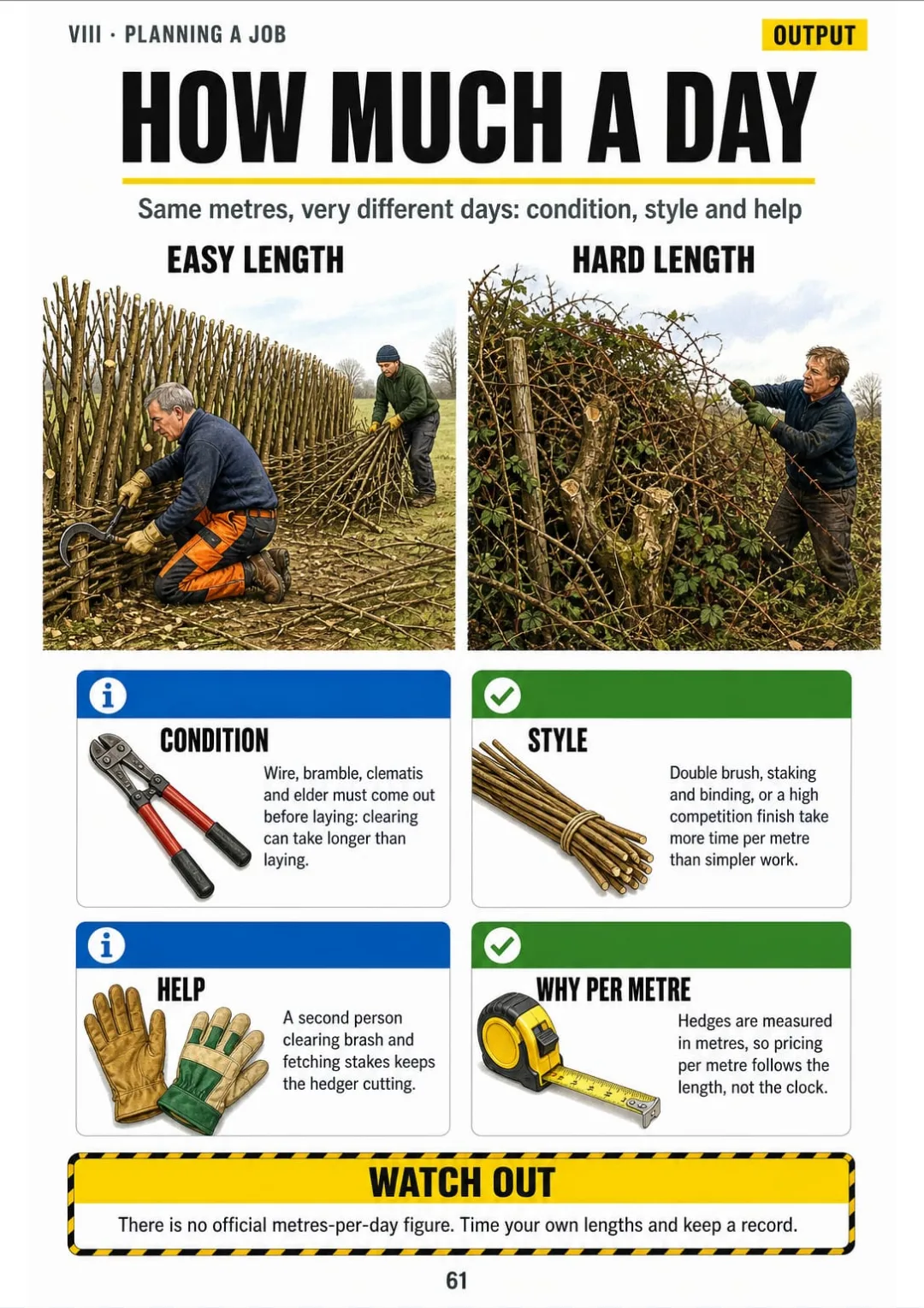
Easy vs hard length: clearing, style and help decide how many metres you lay
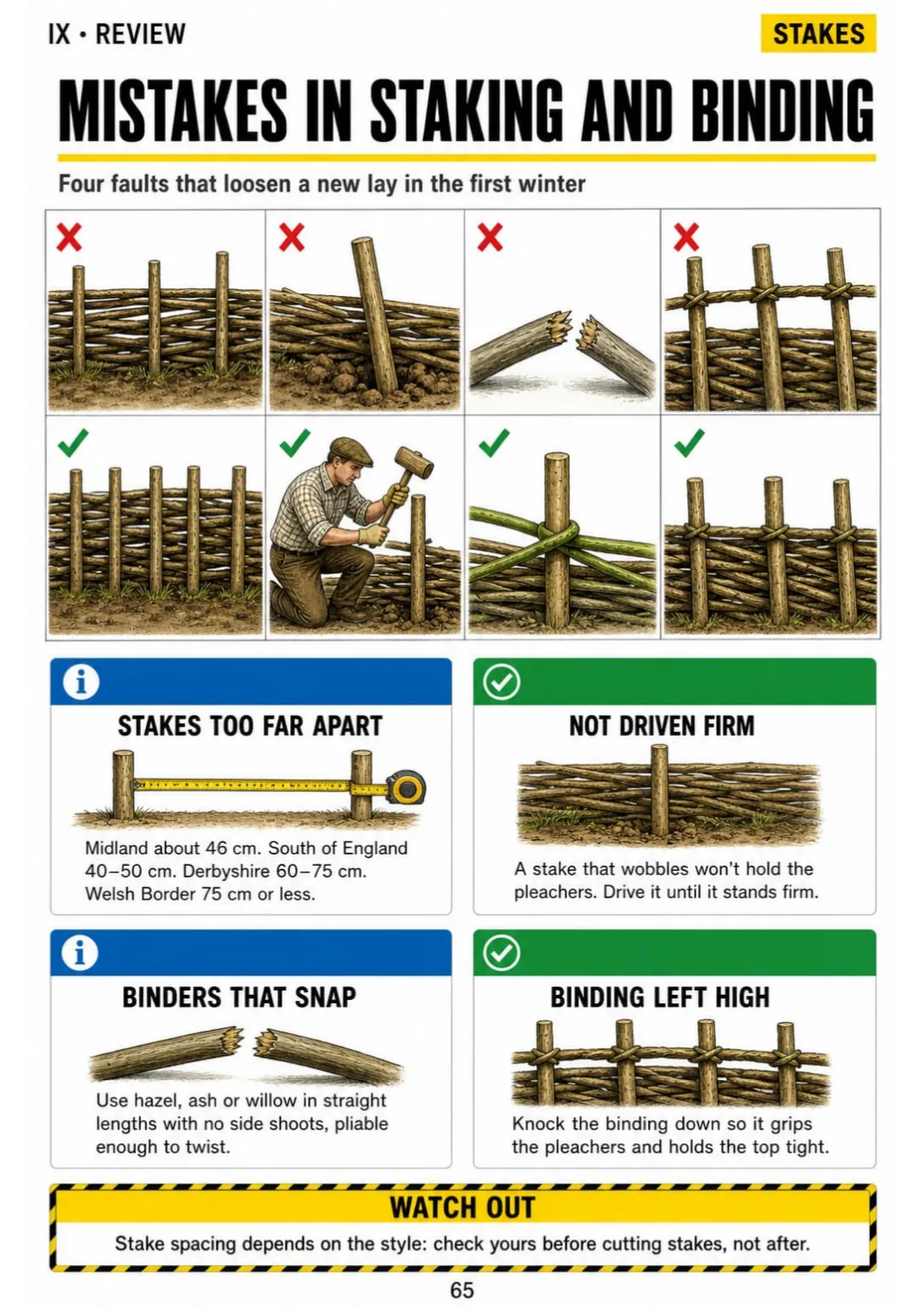
Spacing by style, firm stakes, pliable binders, binding knocked down
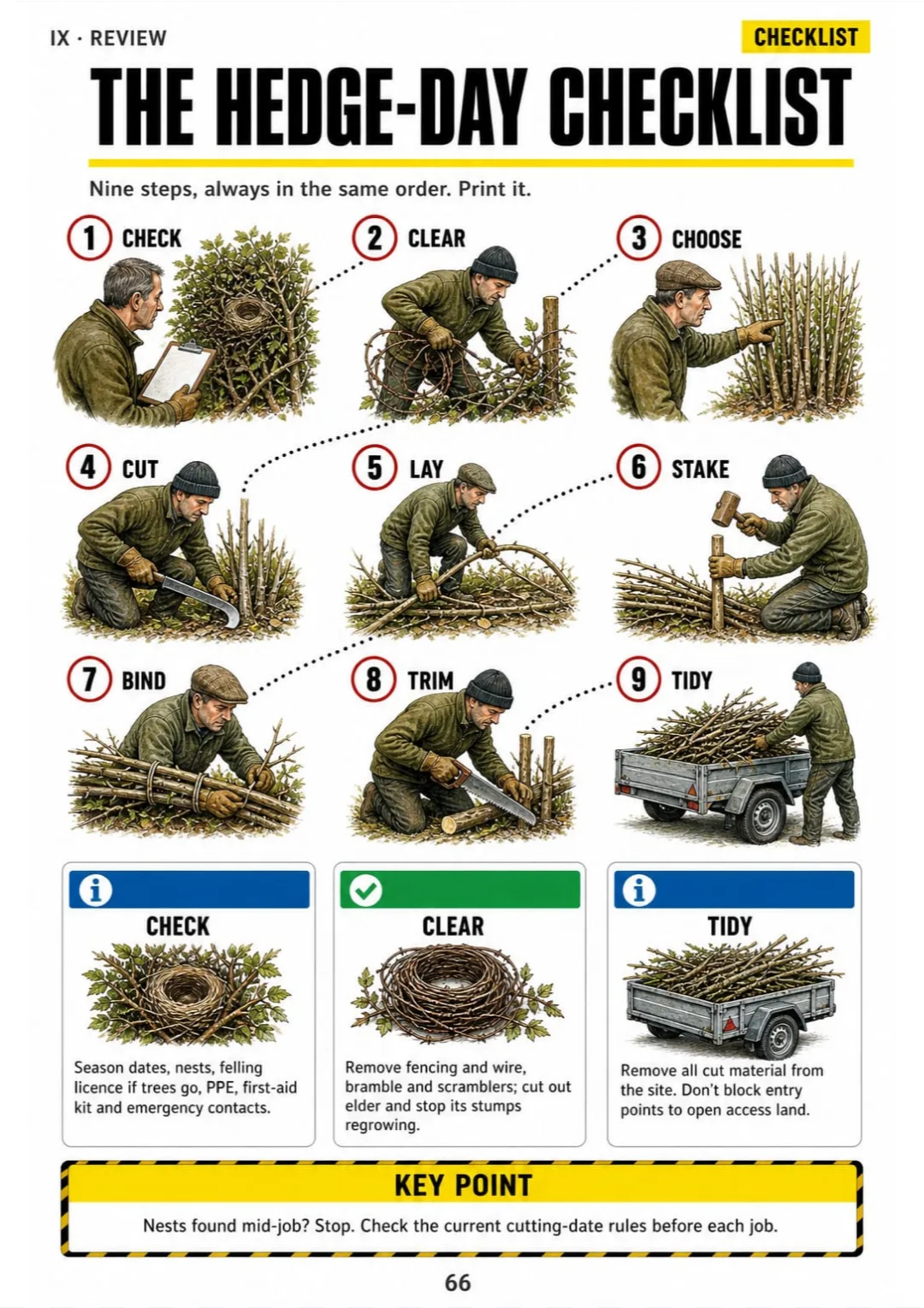
Nine steps from site check to tidy finish, always in the same order

Swipe to see more →

These are real pages from the book. The table of contents is the full one: 9 parts and 63 topics.

The Problem Isn't You. It's How It Was Explained.

You're crouched at a hawthorn stem with the saw running, and you don't know where the cut should stop.

You've watched ten videos and each one cuts differently. One goes steep, one goes shallow, and none of them shows where the saw should stop. So you go too deep and the stem cracks as you bend it down.

Split hinge: cut too thin, bent too fast or cut too short.

In Hedge Laying Illustrated the same cut is one page: four drawn steps, angle, open, bend, stop, with the hinge of live bark and sapwood marked right where the saw has to stop.

The rest works the same way: the laying angle, stake spacing, binding in three moves, the four regional styles and the cutting dates. Each one has its own page.

You look at the drawing, go back to the hedge and make the cut without opening the manual again.

COMPARE FOR YOURSELF

The Same Topic, Two Ways to Learn It

THIS
  • The manual: line after line
  • Hinges and cuts explained only in words
  • You get to the hedge still unsure
The hinge, which constitutes the portion of the stem left uncut following the pleaching operation, comprises the outer bark, the cambial layer and a variable proportion of sapwood, the heartwood being of no physiological consequence to the survival of the laid stem. As the cambium and the conductive tissues of the sapwood maintain the vascular connection between the root system and the aerial parts, an excessive reduction of the hinge cross-section will predispose the pleacher to desiccation, whilst an insufficient reduction will impede its flexion.
FOR THIS
  • The hinge in one drawing
  • The layers and steps in a box
  • You see it and you get it
Bark, cambium, sapwood, heartwood: the hinge keeps live bark and sapwood joined to the roots.
CONTENTS

Take a Look at the 9 Parts and 63 Topics

Reading the hedge, tools and safe working, the pleacher cut, laying, stakes and binders, regional styles, the law and aftercare, planning a job and a final review: 67 pages, all illustrated.

IRead the Hedge First · pp. 5-12
  1. Why We Lay a Hedge
  2. The Hedge Cycle: Lay, Trim, Grow, Lay Again
  3. Words of the Trade
  4. Which Species Lay Well
  5. Is This Hedge Ready to Lay?
  6. Too Old, Too Gappy: Coppice or Lay?
  7. Which Side Is the Field Side?
  8. Hedgerow Trees: Keep or Cut?
IITools and Safe Working · pp. 13-20
  1. The Hand Tools Kit
  2. Billhook Patterns
  3. Chainsaw on the Hedge: What Changes
  4. Chainsaw PPE, Item by Item
  5. Chainsaw Training in the UK
  6. Safe Working Zone
  7. Gloves, Thorns and Eyes
  8. Before You Start: Site Check
IIIThe Pleacher Cut · pp. 21-29
  1. Clear the Hedge First
  2. Choose Which Stems to Lay
  3. Anatomy of the Hinge
  4. How Deep to Cut
  5. Where to Start the Cut
  6. The Cut in Four Steps
  7. Why the Hinge Splits
  8. Trim the Heel
  9. Thick Stems and Awkward Stools
IVLaying the Hedge · pp. 30-37
  1. Direction of Lay
  2. The Laying Angle
  3. Overlap and Density
  4. Weaving Pleachers Between Stakes
  5. The Brush: Side Growth
  6. Worked Example: 10 m Laid From Bottom to Top
  7. Starting and Ending a Length
  8. Filling the Gaps While You Lay
VStakes and Binders · pp. 38-45
  1. What Stakes Are For
  2. Choosing Stakes
  3. Stake Spacing
  4. Driving Stakes
  5. What Binders Do
  6. Choosing Binders
  7. Binding in Three Moves
  8. Finishing the Top
VIRegional Styles at a Glance · pp. 46-52
  1. Why Styles Differ
  2. Midland Style
  3. South of England Style
  4. Derbyshire Style
  5. Welsh Styles
  6. The Four Styles in One Chart
  7. Other Local Styles
VIIThe Law, the Season and Aftercare · pp. 53-58
  1. The Laying Season
  2. Nesting Birds and Cutting Dates
  3. Hedgerows Regulations 1997
  4. Protecting the New Lay
  5. The First Year After Laying
  6. Trimming a Laid Hedge
VIIIMeasuring and Planning a Job · pp. 59-62
  1. Measuring a Length
  2. Counting Stakes and Binders
  3. How Much a Day
  4. Writing a Per-Metre Quote
IXReview: Mistakes and Checklist · pp. 63-67
  1. Frequent Mistakes in the Cut
  2. Frequent Mistakes in Laying
  3. Frequent Mistakes in Staking and Binding
  4. The Hedge-Day Checklist
  5. Quick Review in One Page

One Page, One Topic, All Clear

Think of it this way:

It's a cold February morning, the hedge is cleared and the first stem is in front of you. You need to know how low to cut and how far to go.

You open the page on the cut: four drawings, angle, open, bend, stop, and the hinge marked in colour so you can see exactly what to leave.

Protected hedgerow: over 20 m on farmland; removal needs a notice and 42 days.

The same goes for the laying angle, stake spacing, binders, the regional styles and the nesting dates: each one on its own page.

Hedge Laying Illustrated is 67 illustrated pages in 9 parts, with the frequent mistakes, a hedge-day checklist and a one-page review at the end.

What you see drawn, you don't have to memorize.

What's Inside Hedge Laying Illustrated:

Ipp. 5-12

Read the Hedge First

Why we lay, the hedge cycle, words of the trade, which species lay well, when a hedge is ready, coppice or lay, the field side and hedgerow trees.

IIpp. 13-20

Tools and Safe Working

Hand tools, billhook patterns, the chainsaw on the hedge, PPE item by item, training, the safe working zone and the site check.

IIIpp. 21-29

The Pleacher Cut

Know where the saw stops before you start: clearing, choosing stems, the hinge, how deep to cut, where to start, the cut in four steps, why hinges split, the heel and awkward stools.

IVpp. 30-37

Laying the Hedge

Direction and angle of lay, overlap, weaving between stakes, the brush, a 10 m worked example, starting and ending a length, filling gaps.

Vpp. 38-45

Stakes and Binders

A line that holds through the winter: what stakes and binders do, how to choose them, stake spacing, driving stakes, binding in three moves and finishing the top.

VIpp. 46-52

Regional Styles at a Glance

Why styles differ, Midland, South of England, Derbyshire and Welsh, the four in one chart and other local styles.

VIIpp. 53-58

The Law, the Season and Aftercare

Cut in the right months without guessing: the laying season, nesting birds and cutting dates, the Hedgerows Regulations 1997, protecting the new lay, the first year and trimming.

VIIIpp. 59-62

Measuring and Planning a Job

Measuring a length, counting stakes and binders, how much you can lay in a day and writing a per-metre quote.

IXpp. 63-67

Review: Mistakes and Checklist

Frequent mistakes in the cut, in laying and in staking and binding, the hedge-day checklist and a quick review on one page.

At the end of the book: Frequent mistakes, a hedge-day checklist and the whole method reviewed on one page.
Plus: 2 Free Books

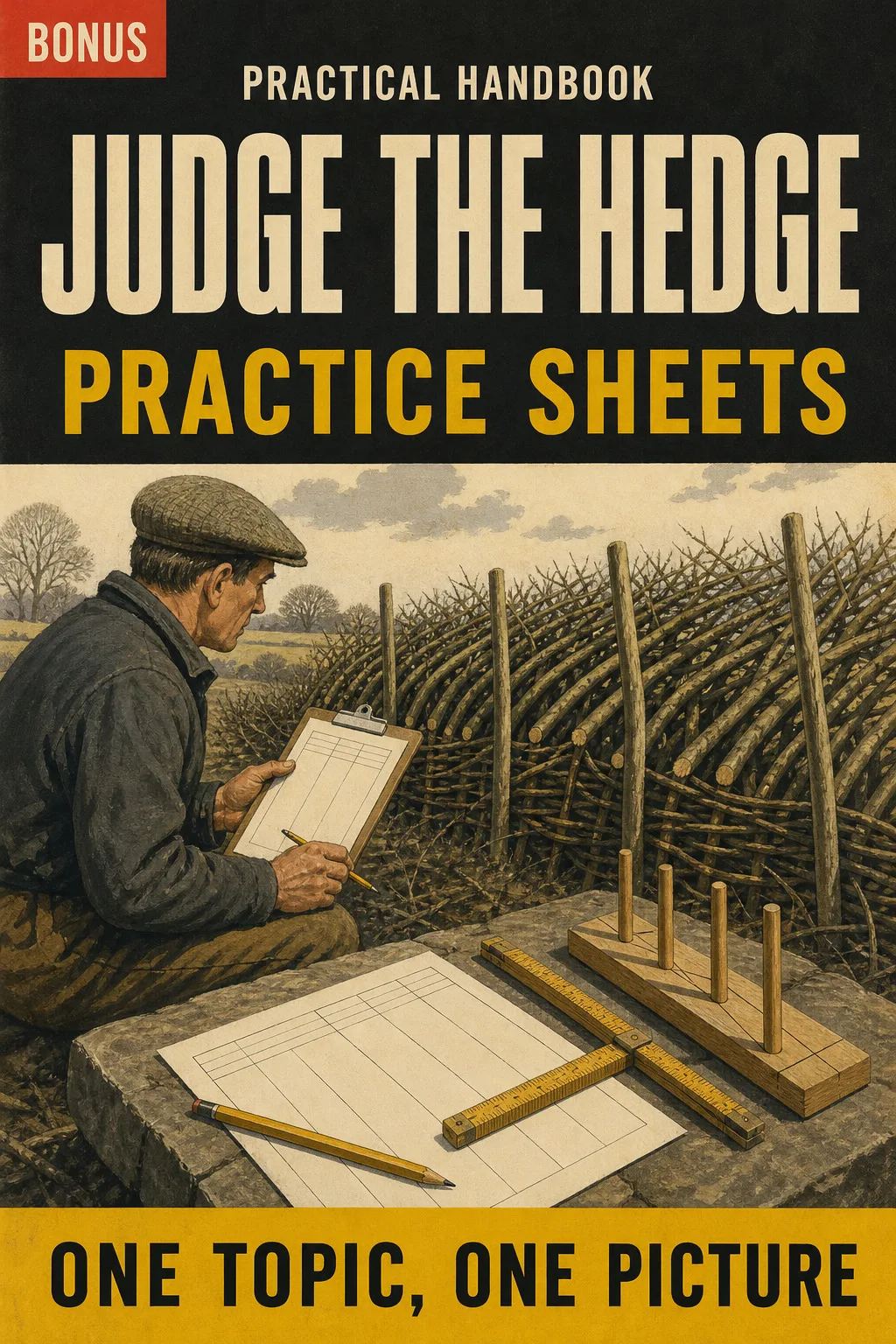
Judge the Hedge: Practice Sheets

BONUS 1: «Judge the Hedge: Practice Sheets»

Value on its own: US$ 17.90

Practise on drawn hedge plans before you pick up the saw: choose which stems to lay, which to cut out and where the gaps need filling, then check your answers.

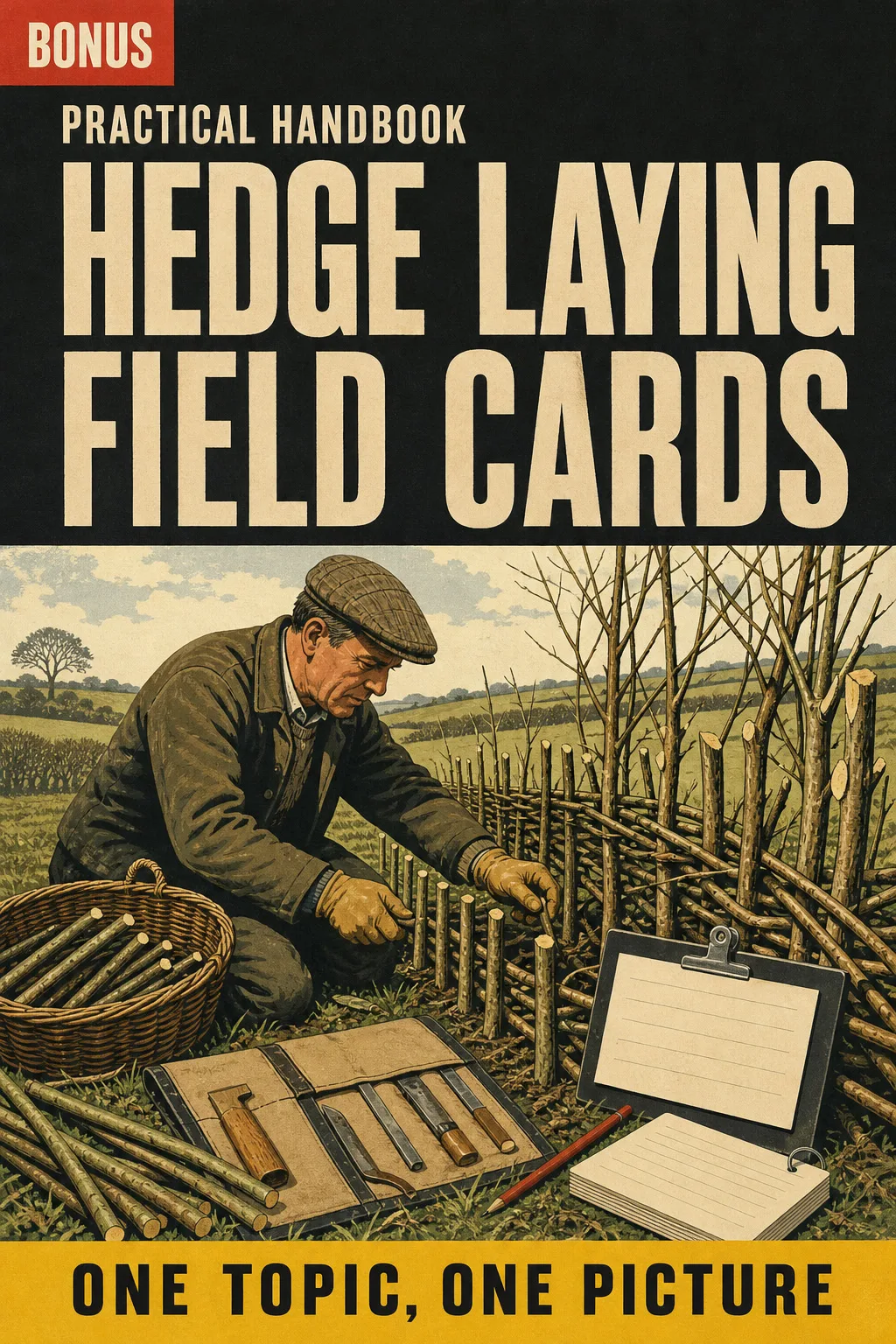
Hedge Laying Field Cards

BONUS 2: «Hedge Laying Field Cards»

Value on its own: US$ 14.90

The pleacher cut, the laying angle, stake spacing and the winter checklist on printable pocket cards, so you have what you need to know to hand at the hedge.

Hedge Laying Illustrated with 2 Free Books

  • Hedge Laying Illustrated: 67 illustrated pagesUS$ 63
  • BONUS 1: Judge the Hedge: Practice SheetsUS$ 17.90
  • BONUS 2: Hedge Laying Field CardsUS$ 14.90
  • High-resolution PDF to printIncluded
Total value US$ 95.80
YOUR PRICE:
US$ 27
You save US$ 68.80
YES, I WANT HEDGE LAYING ILLUSTRATED FOR US$ 27

📄 This is a digital PDF book sent to your email: nothing is printed or shipped.

Secure purchaseEncrypted payment30-day guarantee

PDF by email: We email you Hedge Laying Illustrated as a PDF, together with the two free books. It's a single payment: no installments, no extra charges.

Who This Book Is For

Learning on your own hedge

Learning on your own hedge

You get one sequence to follow on every stem, from judging the hedge to binding the top. Print the page and take it out with you.

A hedge laying day coming up

A hedge laying day coming up

You arrive knowing the cut, the angle and the stake spacing, so you're not waiting for someone to tell you the next stem.

Laying hedges as winter work

Laying hedges as winter work

The hinge, the styles and the season dates to hand, plus pages to measure a length, count stakes and binders and plan the days.

Everything You Get Today

US$ 95.80US$ 27
YES, I WANT HEDGE LAYING ILLUSTRATED FOR US$ 27

📄 This is a digital PDF book sent to your email: nothing is printed or shipped.

30DAYS
GUARANTEE

30-Day Guarantee

Try Hedge Laying Illustrated for 30 days, bonus books included.

We refund everything if the file won't open, if the book isn't what you see here, if you were charged twice or if the email doesn't arrive. Just email us.

You pay once. No subscriptions.

Frequently Asked Questions

Is it for me if I've only laid a hedge once, next to someone who knew how?

Yes. It starts from reading the hedge and goes step by step to the bound top. It assumes you handle tools safely; chainsaw work needs proper hands-on training.

Where does the content come from?

From standard hedge laying practice, checked against the Hedgerows Regulations 1997, the Management of Hedgerows (England) Regulations 2024, the Wildlife and Countryside Act 1981 and HSE chainsaw guidance.

Is it official material?

No. It's an independent illustrated book, not affiliated with any public body, society or competition.

Does it replace a course or hands-on training?

No, and it doesn't give you a certificate. It's a study and field reference. If you use a chainsaw at work, HSE guidance expects proper training, and many landowners and insurers ask for a recognised chainsaw certificate. Nothing replaces laying alongside someone experienced.

Does it work for the hedges in my area, or just one regional style?

It works wherever you lay. The pleacher cut and the hinge work the same in every style. Part 6 draws Midland, South of England, Derbyshire and Welsh side by side, with a chart comparing brush, stakes, binding and height, plus notes on other local styles. The season dates are for England: Wales, Scotland and Northern Ireland have their own rules, so check locally.

When and how does it arrive?

As a PDF by email, to the address you enter at checkout, together with the 2 free books.

Do I have to pay every month?

No. It's a one-off payment.

Can I have it on paper?

Yes. The PDF is print-friendly: print it at home or at a print shop and take the field cards out to the hedge.

How does the refund work?

You have 30 days. We refund everything if the file won't open, if the book isn't what you see on this page, if you were charged twice or if the email doesn't arrive: just email us.

Before You Close This Page

No more rewatching videos that each do it differently.

The pleacher cut, drawn in front of you.

You get to the hedge knowing where everything is.

Drawings make studying faster.

The book is right below.

One-time payment: US$ 27 · Guarantee: 30 days · PDF by email

YES, I WANT HEDGE LAYING ILLUSTRATED FOR US$ 27

📄 This is a digital PDF book sent to your email: nothing is printed or shipped.